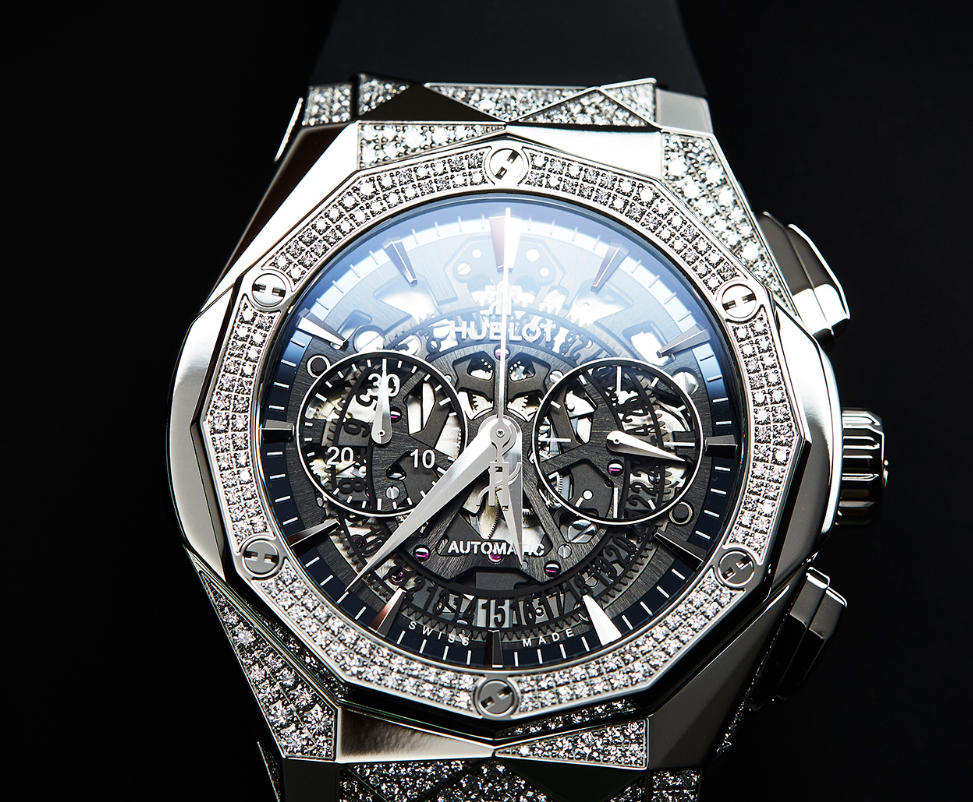
Richard Orlinski’s sculptural language works on a Hublot case because the watch already has strong edges and visible hardware. On the Classic Fusion Aerofusion Chronograph Orlinski, those edges become the central design idea. The Pavé treatment introduces yet another reflective surface, making proportions harder to judge from a single promotional photograph.
This is an editorial image-based examination, not a claim of hands-on testing. The photographs supplied with the earlier article offer several useful angles but cannot verify the stone material, mechanical movement or finishing quality under a loupe. Those limits matter especially where a watch is described using factory marketing terms.
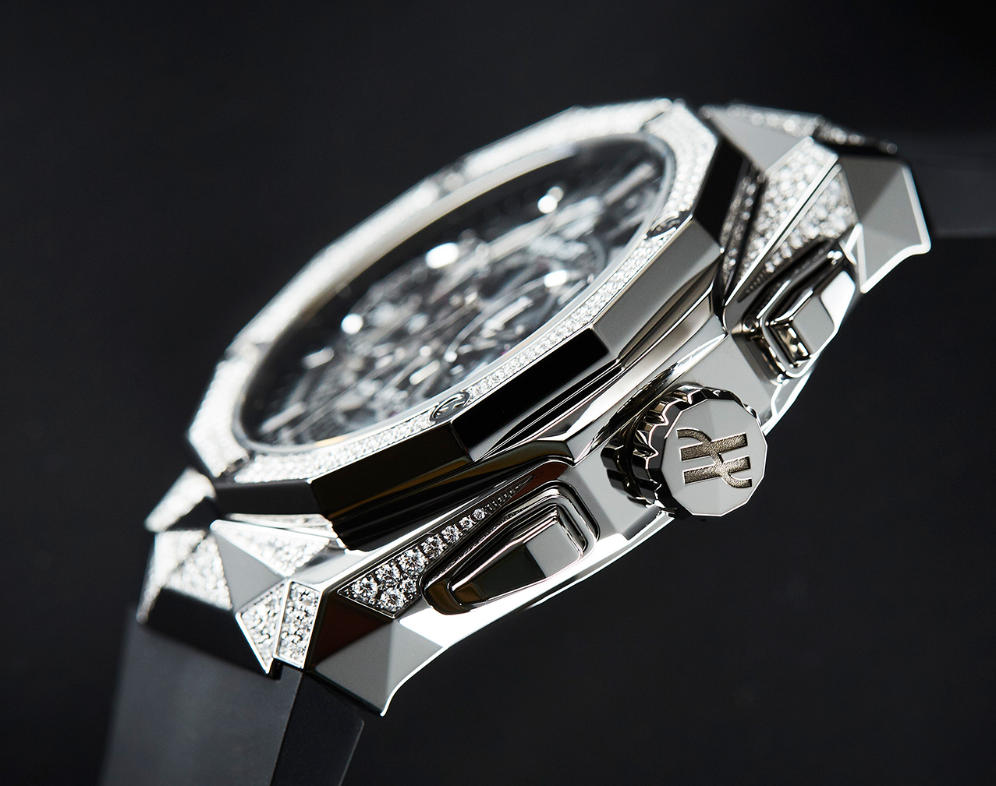
Facets before decoration
The first thing to study is the relationship between flat facets. If the slopes vary or the facet edges do not meet cleanly, the case loses the intended sculptural rhythm. The bezel should not look like an unrelated ring sitting above the geometry. A Classic Fusion Orlinski replica succeeds visually when the transitions feel intentional.
For broader context, the Hublot replica watch editorial covers both restrained Classic Fusion models and more angular alternatives. Orlinski sits between them: the base case is recognizably Classic Fusion, but the surface treatment is much more assertive.
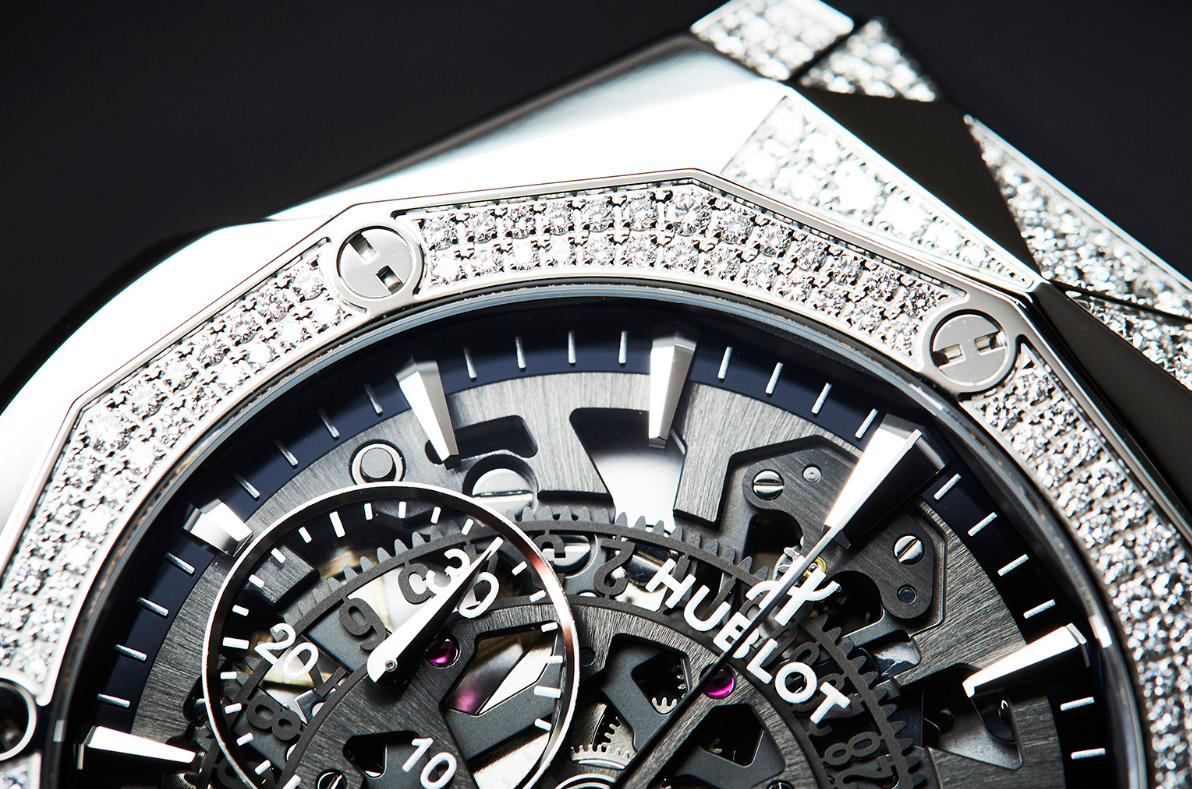
Then examine the dial. A skeletonized chronograph, metallic detail and bright Pavé surfaces can fight for the same attention. Minute markers and the chronograph registers need enough separation for the time to remain readable. In photographs, strong contrast may sharpen printed elements artificially, so the surrounding edges provide a more reliable comparison point.
The strap connection is a final check. A faceted case that suddenly meets a broad, awkward strap loses much of its visual flow. Side images can also expose an overly thick case or a crown that sits too far away from the surface.
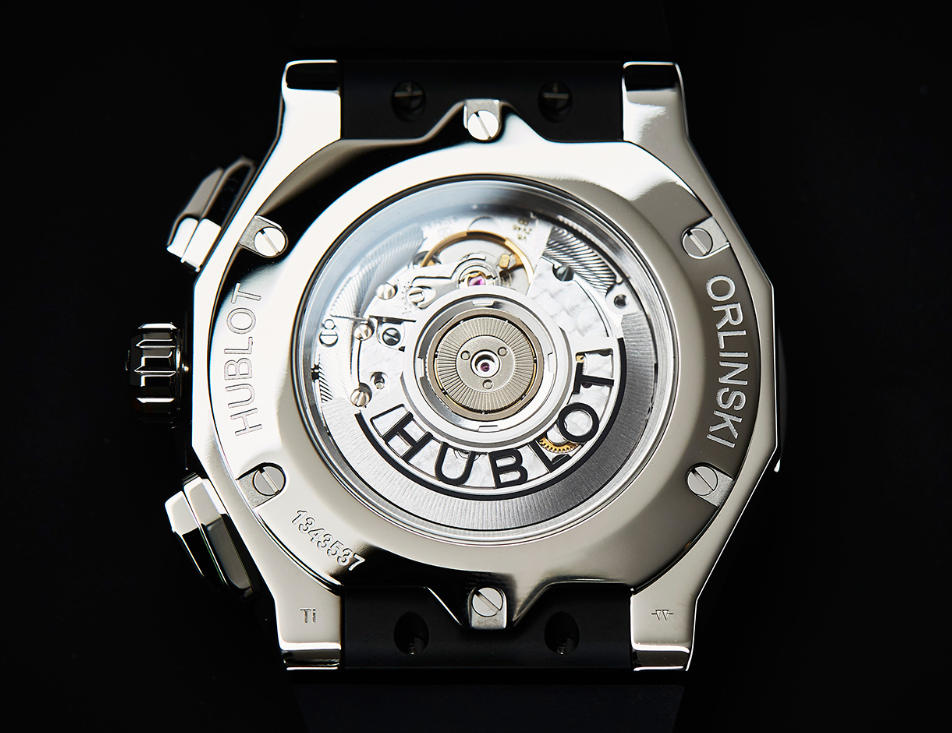
The Classic Fusion archive is useful for comparison with quieter versions of the collection. Orlinski is not simply a more decorative Classic Fusion; it changes the criteria by which one should evaluate every visible junction.