The three watches pictured in this older Hublot comparison do not belong to one neat ranking. A Big Bang with an exposed, dramatic dial, an Aerofusion-inspired piece and a restrained Classic Fusion make three very different demands on the eye. Treating them as interchangeable “top picks” hides the useful point: a replica can look convincing in one design family and noticeably less balanced in another.
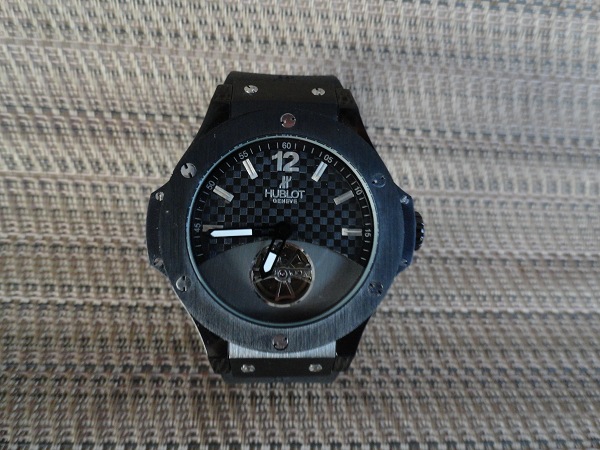
The Big Bang tourbillon style invites attention to its layered case. Notice the height of the bezel above the middle case, the placement of the exposed screws and the depth beneath the crystal. A front-facing photograph may conceal an excessive case thickness; a side view often shows more. The tourbillon appearance also needs careful language. A visible aperture or rotating feature is not, by itself, evidence of a movement matching an original Hublot mechanism.
For readers tracing how these visual signatures fit into the wider range, the Hublot replica watch editorial homepage provides an overview of the brand-specific subjects covered here. This article instead stays with the differences between three identifiable designs, rather than trying to rank every Hublot model.
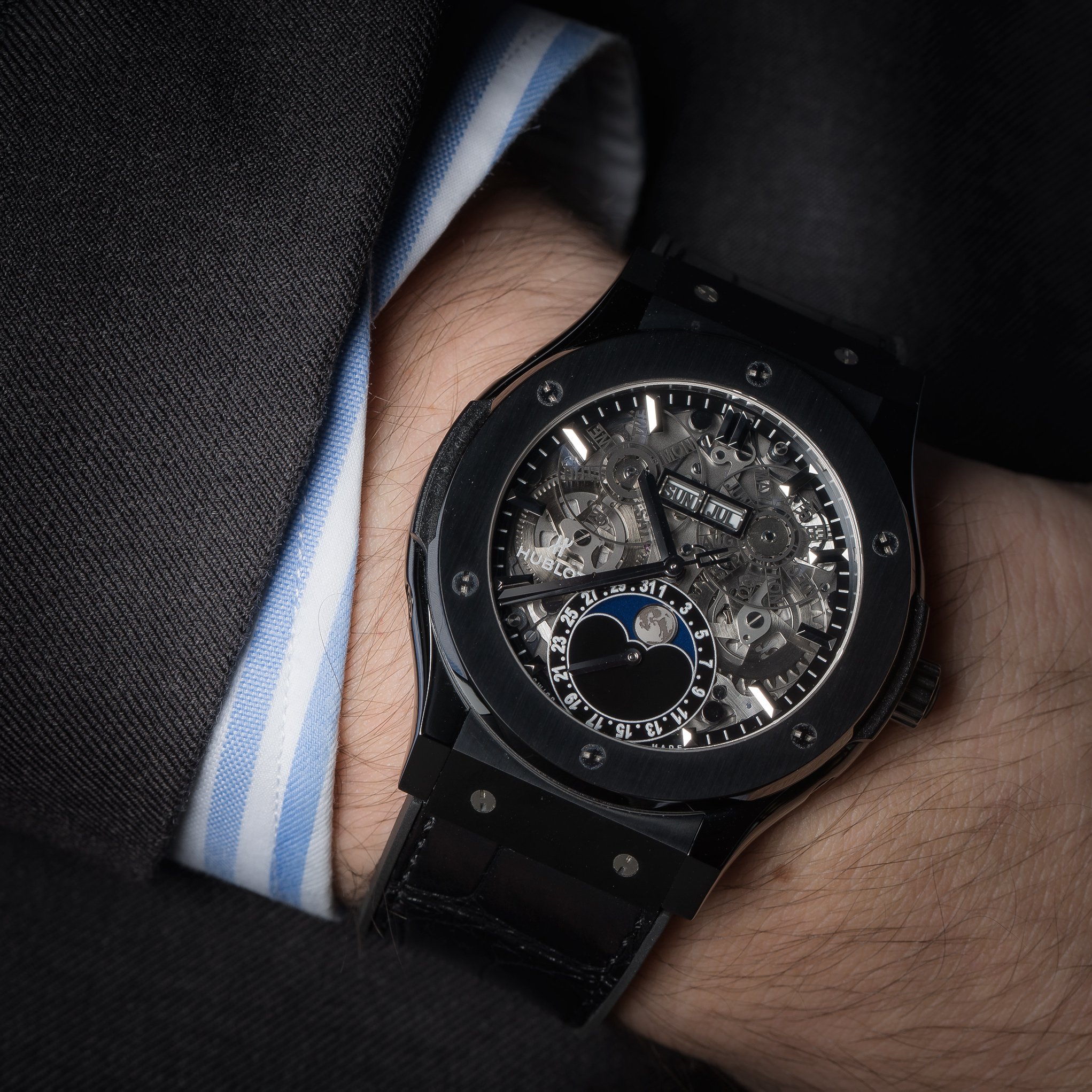
The Aerofusion-style watch works differently. Its dark surfaces and busy dial ask whether the subdials have enough separation and whether the outer chapter ring looks crowded. The color may make a poorly aligned hand less conspicuous in a single photograph, but bright side lighting can reveal inconsistent printing, weak edge definition and too much reflective glare.
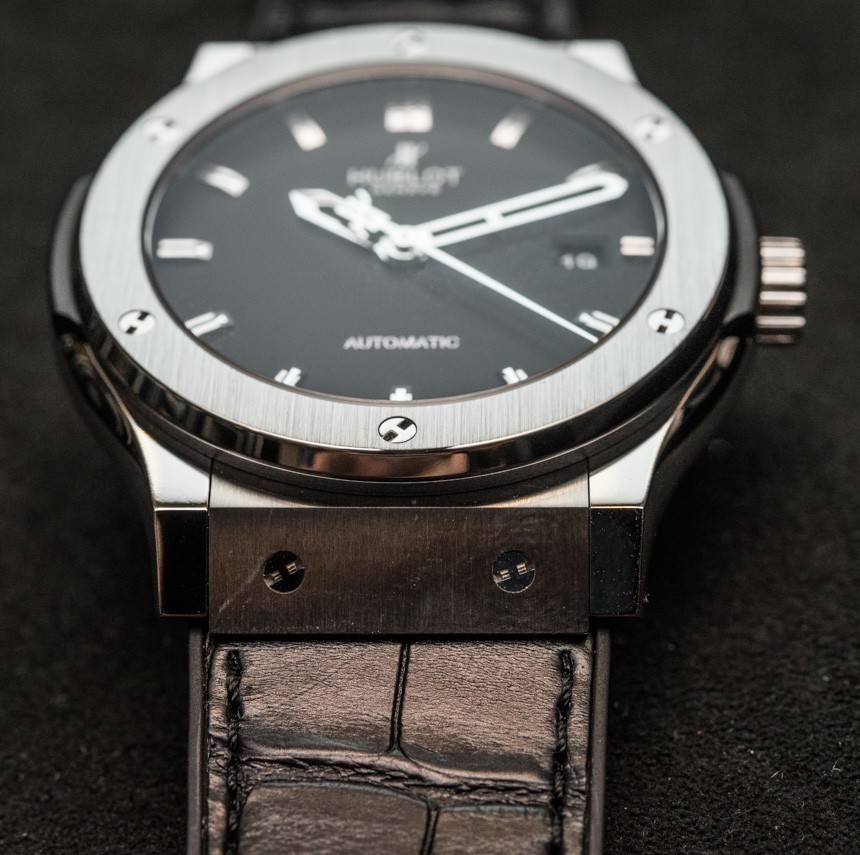
With the plain Classic Fusion, there is little to hide behind. The hour markers, handset, bezel screw positions and distance between the dial edge and the case become the story. An overly thick bezel can make a nominally elegant model appear heavy. A bracelet or strap that leaves an awkward gap at the case can have the same effect.
These distinctions explain why the Hublot collections overview is a more helpful next stop than a generic list of inexpensive watches. Big Bang, Aerofusion and Classic Fusion should be assessed with different criteria, even when the same seller uses identical quality labels for all three.
| Design | Primary visible comparison |
|---|---|
| Big Bang | Bezel height and layered case |
| Aerofusion | Subdial spacing and contrasting surfaces |
| Classic Fusion | Marker alignment and restrained bezel proportions |
The original photographs are useful as an archive of design preferences, not proof of current stock, factory capability or long-term reliability. Without side-by-side measurements, movement inspection and photographs under consistent lighting, there is no defensible universal winner. What remains valuable is the comparison method: start with case architecture, move to dial geometry, and finish with the parts of the watch that touch the wrist.