Ceramic presents a different challenge on a Classic Fusion than on an aggressively layered Big Bang. The Classic Fusion relies on clean surfaces and quieter proportions. When most of the case is rendered in a similarly dark or glossy material, small differences in reflection and edge definition become part of the design rather than incidental flaws.
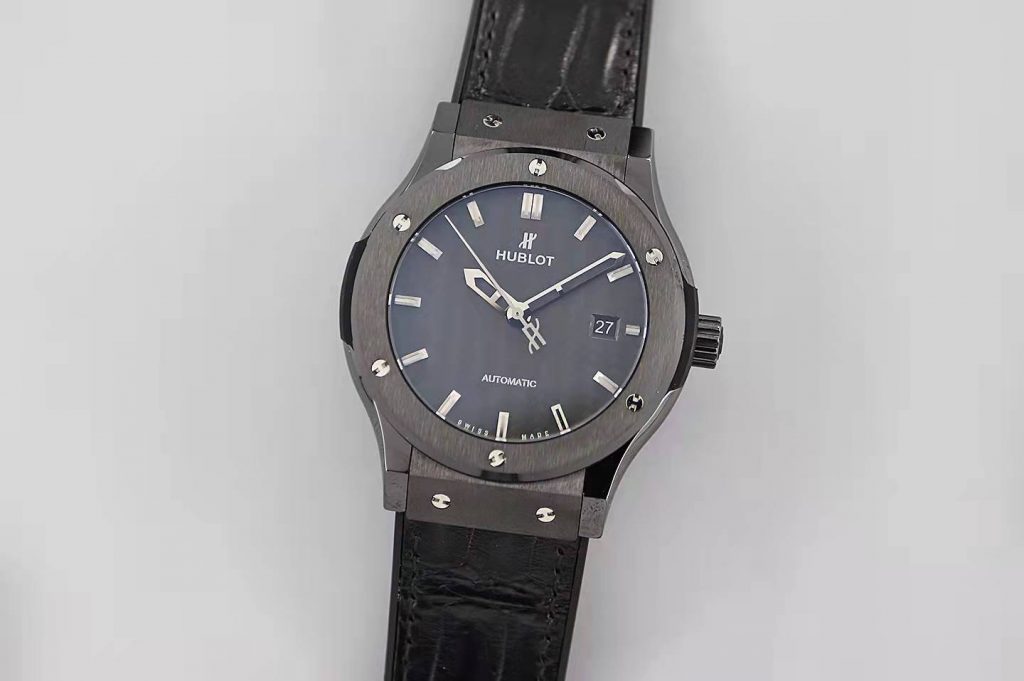
Older accounts of these watches concentrated on factory names and availability. Those references are useful only as historical context, not proof of current stock or a guaranteed standard of construction. This article instead concentrates on the visible details a reader can reasonably compare in the photographs.
The first detail is the meeting point of bezel and middle case. A ceramic Classic Fusion replica should have a consistent outer profile, with edges that appear deliberate under both soft and direct light. Heavy reflections can make a surface seem more curved than it is; photographs taken from only one angle can therefore be misleading.
At the Hublot replica editorial homepage, material differences are considered across the whole brand. The reason to examine ceramic specifically here is that finishing changes the feel of a restrained case more quickly than it changes a visually complex one.
The dial needs just as much scrutiny. A clean three-hand arrangement has fewer distractions, so the distance between the logo, hour markers, hands and date opening, if present, becomes easier to judge. Inconsistent marker height or an overly wide minute track can create imbalance even when the text looks crisp.
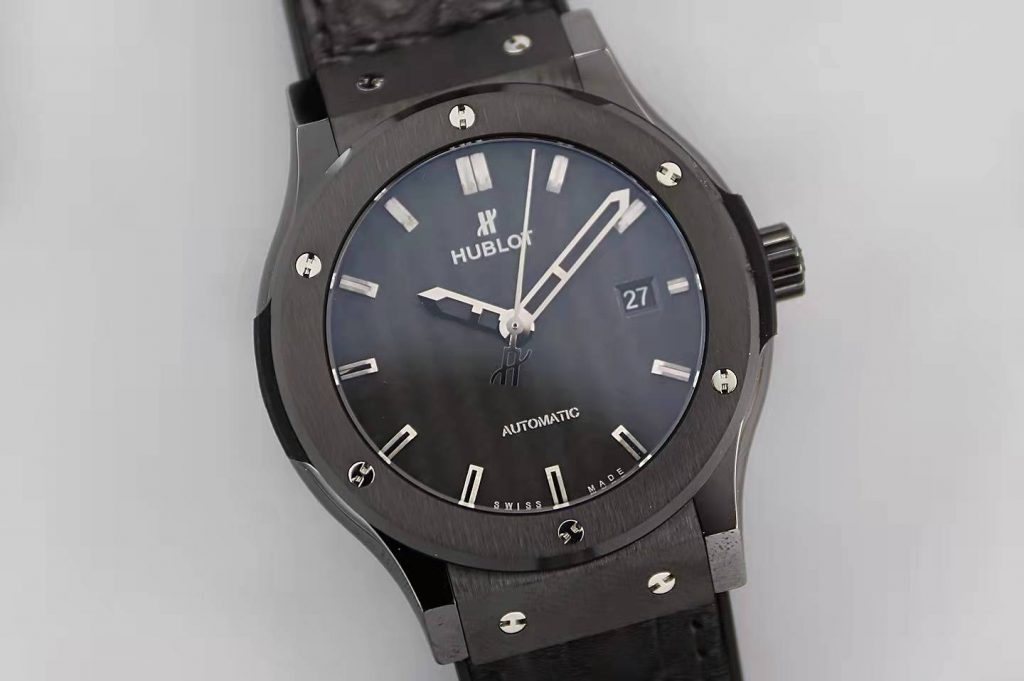
There are limits to what the photographs can prove. Color accuracy depends on light and processing; the images cannot establish the ceramic grade, resistance to damage, internal movement or water sealing. These must not be inferred from a seller’s “1:1” or other unverified description.
- Compare bezel reflections in more than one light source.
- Inspect dial-marker alignment before relying on a quality label.
- Keep material and durability claims separate from visual evidence.
The Classic Fusion topic archive offers contrasting case styles that make the ceramic models more intelligible. The goal is not to award an absolute quality rating, but to identify which visible features preserve this collection’s relatively understated design language.